
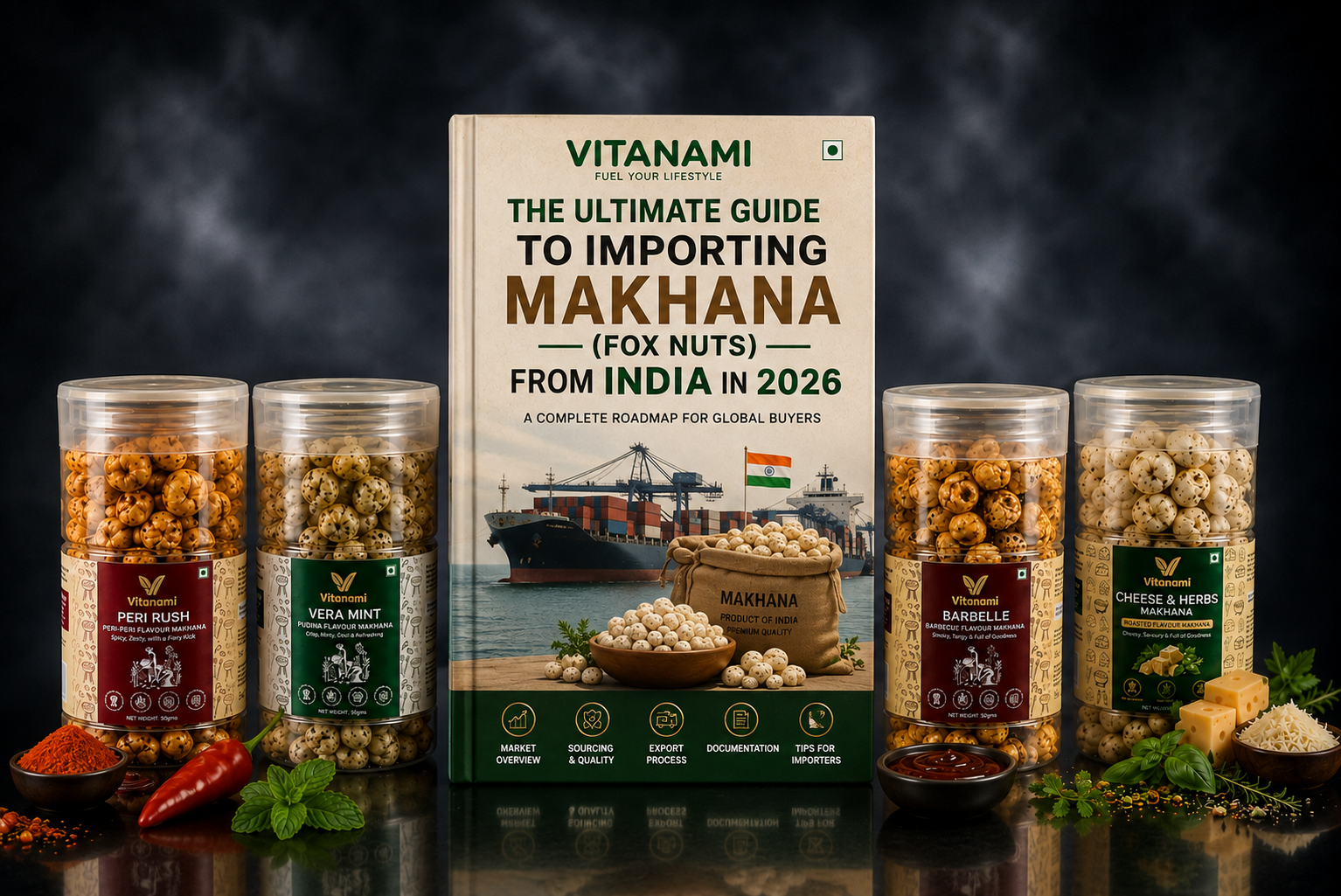
The global demand for makhana (fox nuts) has grown significantly in recent years, driven by increasing consumer preference for healthy, plant-based, and gluten-free snacks. India, being the largest producer of makhana, has become the leading sourcing destination for importers worldwide.
If you are planning to import makhana from India in 2026, this comprehensive guide will walk you through everything you need to know—from sourcing and quality standards to packaging, logistics, and compliance requirements.
Why Import Makhana from India?
India accounts for over 85–90% of global makhana production, primarily cultivated in the states of Bihar and Eastern India. Importing directly from India offers several advantages:
- Competitive pricing due to direct sourcing
- Access to premium-grade fox nuts (large size, white kernels)
- Availability of bulk and private label packaging options
- Experienced exporters with global compliance knowledge
- Growing innovation in flavored and value-added makhana products
- Types of Makhana Available for Import
Understanding the different varieties helps in selecting the right product for your market:
1. Raw (Natural) Makhana
2. Roasted Makhana
3. Flavored Makhana - Higher margin potential
4. Graded Makhana Sizes
- Quality Parameters to Check Before Import
Ensuring consistent quality is critical for long-term success.
Key parameters include:
- Size uniformity (graded batches)
- Color (white to off-white, minimal discoloration)
- Moisture content (typically controlled for shelf life)
- Texture & crunch
- Cleanliness (free from dust, husk, and foreign matter)
Many exporters follow multi-stage sorting and grading processes to maintain consistency across batches.
Private Label & Custom Packaging Options
One of the biggest advantages of importing from India is the flexibility in custom packaging and private labeling.
You can opt for:
- Printed stand-up pouches (zip lock)
- Retail-ready small packs (15g to 100g)
- Bulk packaging (5kg, 10kg, 20kg)
- Export master cartons (40–60 units per box)
Most manufacturers support:
- Brand logo and artwork printing
- Batch coding and shelf-life marking
- Assistance with packaging development
This makes it easier to launch your own makhana brand in international markets.
Certifications and Compliance Requirements
When importing makhana, compliance depends on your destination country. Common requirements include:
- Food safety certifications (GMP, HACCP, ISO 22000)
- Lab testing reports (microbiology, heavy metals)
- Ingredient and nutritional information
- Labeling compliance as per local regulations
For markets like the USA, UK, EU, and Middle East, it is important to verify import norms, including labeling, ingredient approvals, and documentation.
Shipping & Logistics: Incoterms Explained
Indian exporters typically offer multiple shipping options:
- EXW (Ex Works)- Buyer handles everything from factory
- FOB (Free on Board)- Seller delivers to port
- CIF (Cost, Insurance & Freight)- Seller covers freight & insurance
- DAP/DDU (Delivered at Place/Unpaid)- Delivered to buyer location (duties excluded)
Recommended Shipping Methods:
- Air Freight: Faster, ideal for small or urgent shipments
- Sea Freight: Cost-effective for bulk orders
Choosing the right Incoterm ensures cost transparency and smoother logistics planning.
Minimum Order Quantity (MOQ)
MOQ varies depending on the supplier and packaging type:
- Bulk Makhana: Typically 50–200 kg
- Private Label Packs: Usually 1,000–5,000 units
- Trial Orders: Some exporters offer smaller pilot quantities
Starting with a test order is recommended before scaling.
Pricing Structure for Imported Makhana
The cost of importing makhana depends on multiple factors:
- Raw material grade (size & quality)
- Flavored vs natural product
- Packaging type and complexity
- Order volume
- Shipping method (air vs sea)
Typical pricing components:
- Product cost per kg
- Packaging cost per unit
- Freight charges
- Import duties and taxes
Understanding this breakdown helps in calculating your final landed cost and profit margins.
Step-by-Step Process to Import Makhana
- Identify a reliable exporter
- Request samples and product specifications
- Finalize pricing, packaging, and MOQ
- Approve artwork and packaging design
- Confirm order with proforma invoice
- Arrange payment terms
- Shipment dispatch and documentation
- Customs clearance at destination
- Product distribution or retail launch
Tips for Choosing the Right Supplier
To ensure long-term success, choose a supplier who offers:
- Consistent product quality
- Transparent communication
- Flexible packaging solutions
- Export experience in your target market
- Ability to scale production
Building a long-term partnership can help you expand into new markets and product categories.
Market Trends for 2026
The makhana market is expected to grow rapidly in 2026 due to:
- Rising demand for healthy snacking alternatives
- Increased popularity of plant-based diets
- Expansion of private label brands
- Growth in e-commerce and Amazon FBA businesses
Flavored makhana and premium export-grade fox nuts are expected to drive higher margins.
Conclusion
Importing makhana (fox nuts) from India in 2026 presents a strong opportunity for businesses looking to enter the healthy snack market. With the right supplier, quality checks, and packaging strategy, you can build a successful and scalable product line. By understanding sourcing, compliance, logistics, and market trends, importers can confidently navigate the process and establish a strong presence in both retail and online markets.